
The disease affects people of all races and Fitzpatrick skin types4
Vitiligo is a chronic autoimmune disease characterized by depigmentation of the skin.1
70% of patients say their vitiligo has had a significant impact on their social activities.2 *
*Based on a case-control study of 50 patients with nonsegmental and segmental vitiligo and a 50-patient matched healthy control group. Calculated estimate; not an exact reported figure.2
Vitiligo impacts nearly 3 million adults in the United States3


Location of patches varies, but many patients report patches on socially critical areas including the face, hands, and groin5
Vitiligo occurs in 2 main forms6,7:
~84%of patients
Nonsegmental vitiligo3,8,9
- Immune-mediated condition that results in symmetrical and bilateral white patches
- Often progressive with an unpredictable disease course
~16%of patients
Segmental vitiligo10,11
- Unilateral distribution of white patches
- Often spreads rapidly and stabilizes after 6-24 months
- More resistant to medical therapies
Segmental vitiligo accounts for 5%–16% of overall vitiligo cases. Calculated figures are derived from these ranges.

Of patients reported that their disease has progressed since the diagnosis12
Patients reported slow (36%) and rapid (~32%) vitiligo progression after the first appearance of patches12
*Based on a global, qualitative study of patients with diagnosed vitiligo, recruited from 17 countries (N=3541). Calculated value based on data from a qualitative patient survey.12
The exact cause of vitiligo is unknown5,11,13
Vitiligo is hypothesized to occur when oxidative stress (caused by environmental, chemical, emotional, or physical factors) triggers an autoimmune response that results in melanocyte destruction. It occurs in patients with a genetic predisposition for the disease.
~50%
Almost half of patients develop vitiligo before the age of 2011

Individuals with a family history of the disease are more likely to have an early age of onset14
Despite its prevalence, the diagnosis of vitiligo can be challenging in some cases3,5,10,12
Diagnosis is based on clinical findings of patches on the skin:
- Assessment of skin type is useful in the initial examination, together with photographs to record the extent of the disease.
- Note that it may be more difficult to see patches on patients with lighter skin tones.
- Diagnosis can be aided by the use of a Wood's lamp, which allows you to see the full extent, as well as signs of activity.
Taking pictures at every visit can help you track disease progression
Understanding the progressive, autoimmune nature of vitiligo7,15
Vitiligo is an unpredictable, progressive autoimmune disease in which the immune system targets and destroys melanocytes, resulting in depigmented patches of skin.7,15
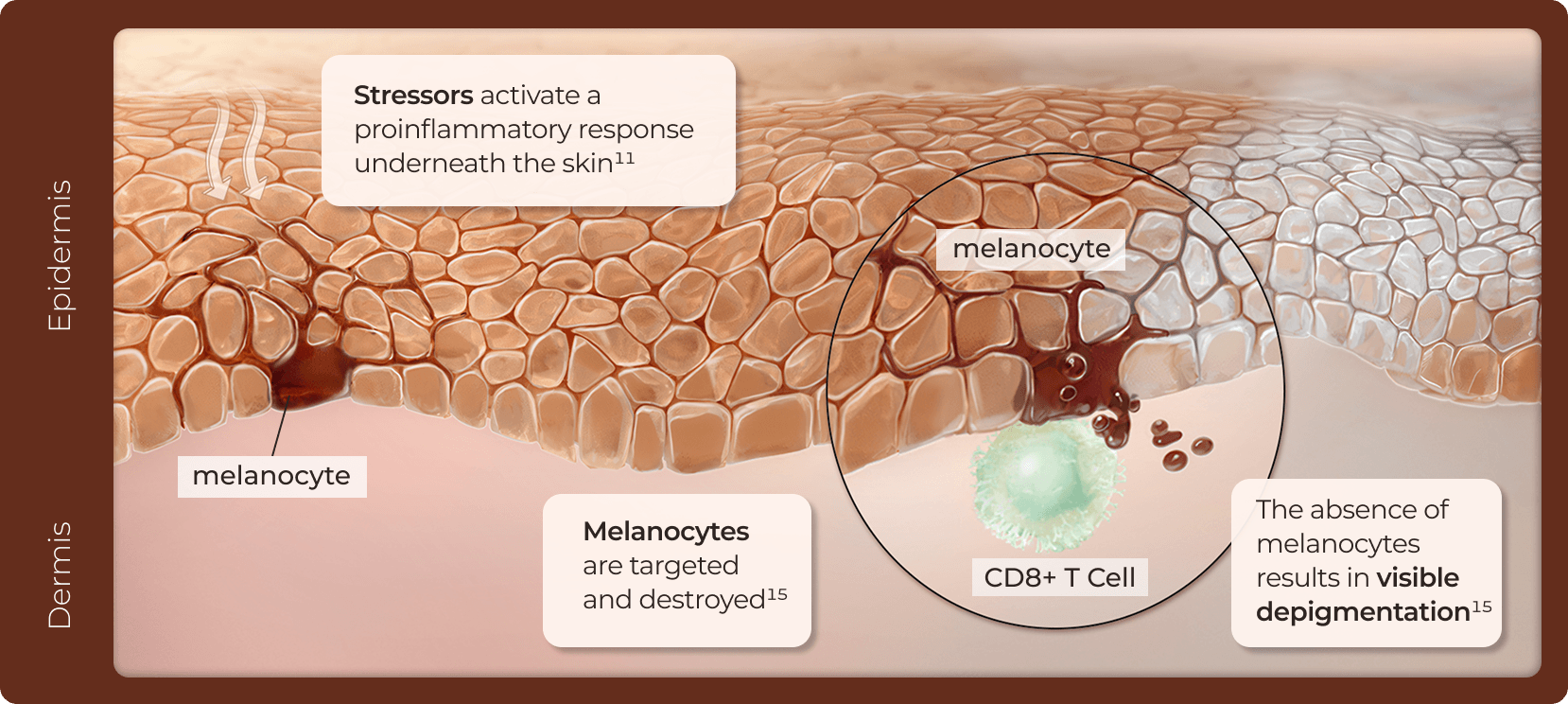
While the exact mechanism of disease of vitiligo is unknown, it is understood the immune system plays a key role. The image above is for illustrative purposes only, based on currently available scientific literature, and is not intended to depict actual pathogenesis. Ongoing research continues to investigate other potential mechanisms.*
*For both nonsegmental and segmental vitiligo.
In vitiligo, there is a dysregulation of the immune system that precedes melanocyte destruction and subsequent depigmentation.5,15
Assessing disease activity can be challenging:
Clinical signs of active disease can present as16:
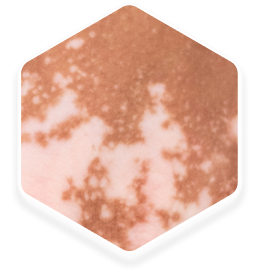
Confetti-like depigmentation
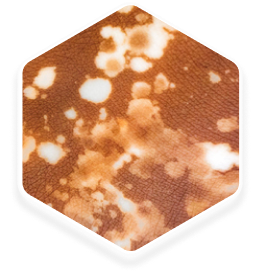
Trichrome lesions
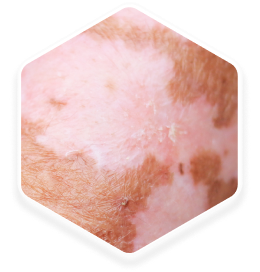
Areas of Koebner's phenomenon
New or enlarging patches of depigmentation within the previous 3-6 months10*
Immune activity in the skin may be present in patients with stable disease5†
†Stable disease is defined as having no clinical signs of activity or new/spreading patches at least 6 months to 1 year.17*
*Clinical definition of stability and active disease may vary.
Vitiligo is unpredictable and may progress even after prolonged periods of stability.5,6,8,18
Validated tools to measure the extent of vitiligo
What is VASI?
The Vitiligo Area Scoring Index (VASI) is a clinician-reported measure that assesses affected body surface area (BSA) and level of depigmentation of vitiligo patches and is commonly used to determine efficacy of treatment.19
How does it work?
VASI is based on a composite estimate of overall area of vitiligo patches multiplied by the degree of depigmentation within each affected area.19
Total VASI (T-VASI)
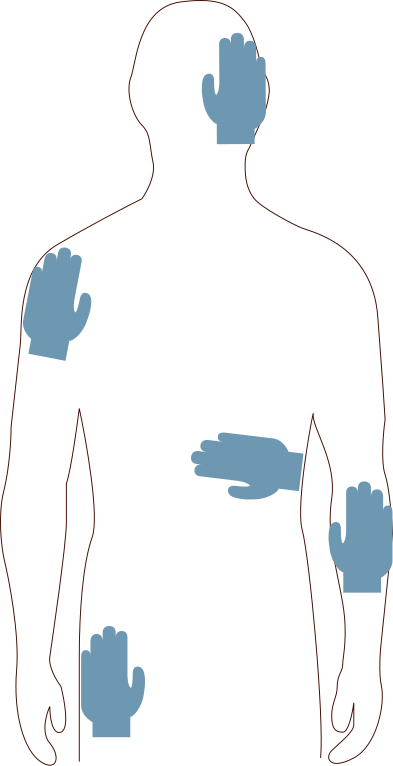
Is calculated based on the total of the product of hand units and depigmentation in each patch assessed using preset thresholds (0%, 10%, 25%, 50%, 75%, 90%, and 100%).19

Hand-sized unit:
1% of BSA
T-VASI includes assessment of all 6 regions of the body:
- Head and neck
- Upper extremities
- Trunk
- Hands
- Lower extremities
- Feet
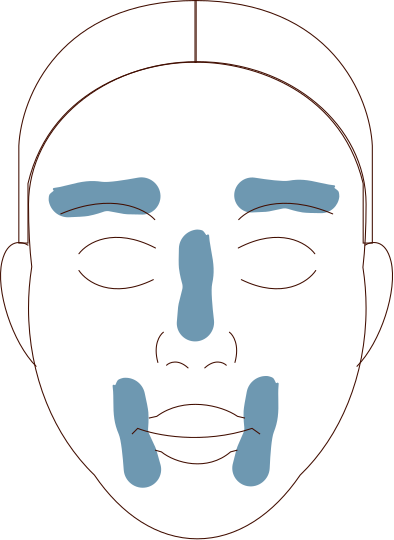
Facial VASI (F-VASI)
Uses a fingertip unit (FTU) to measure the sum of FTUs of vitiligo patches on the face, assessing the extent of facial involvement. F-VASI assessment includes all areas of the face and is included in the T-VASI score.19,20

Thumb-sized unit:
0.1% of BSA
Level of depigmentation is assessed using preset thresholds for each patch19-21:
Hover to expand the images below.
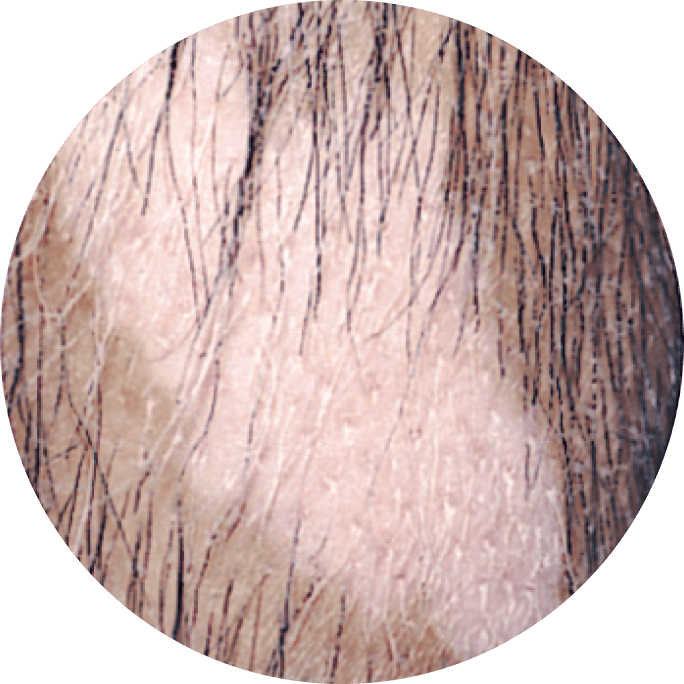
100%
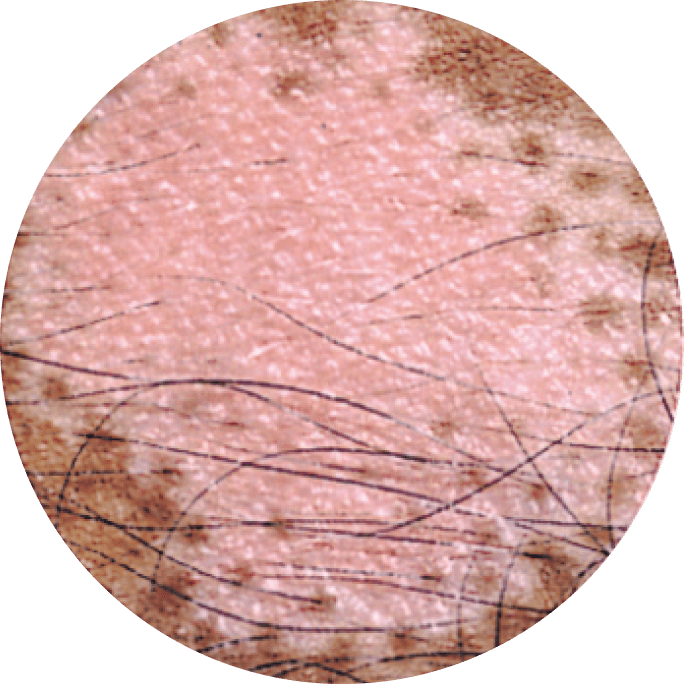
90%
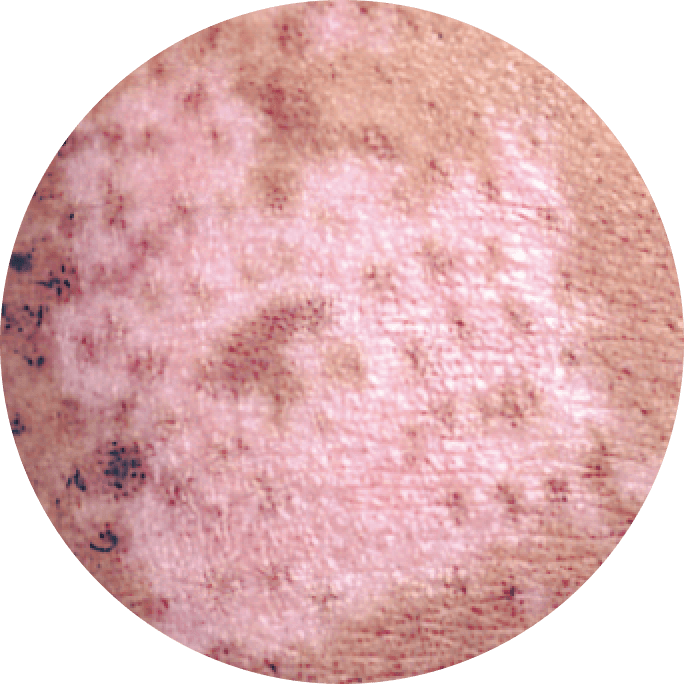
75%
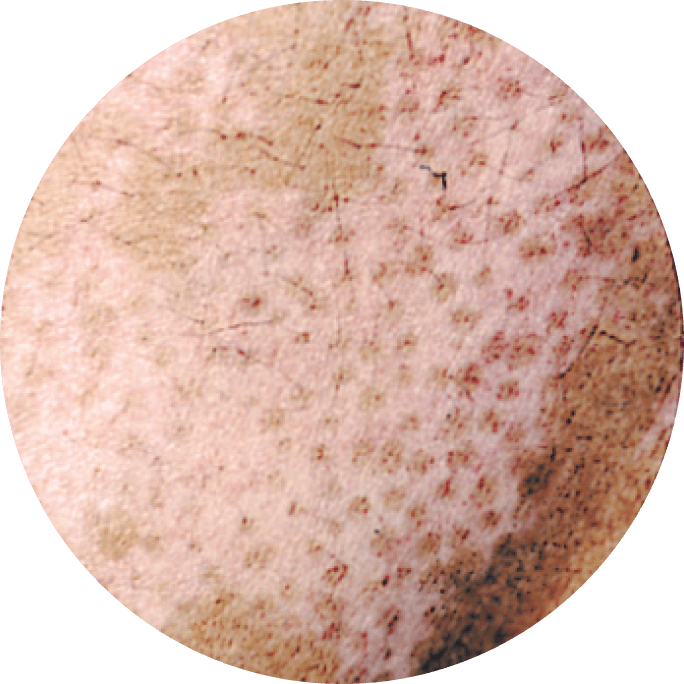
50%
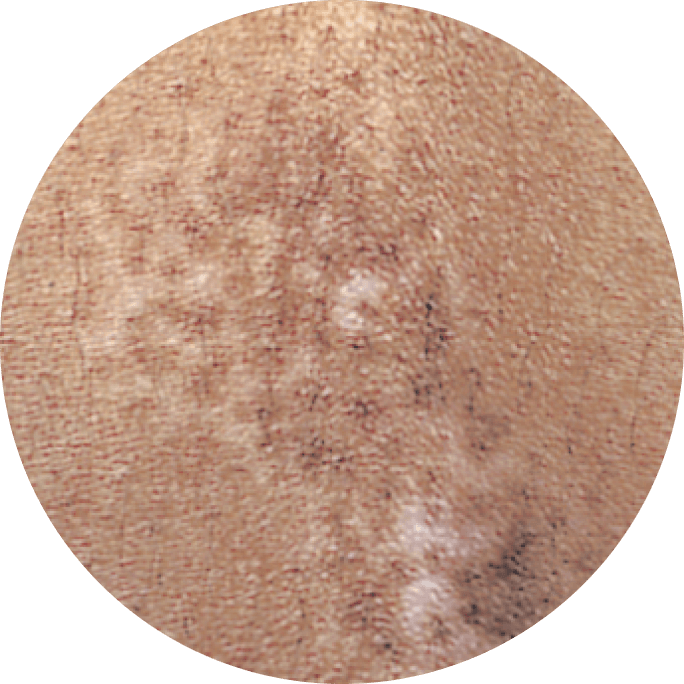
25%
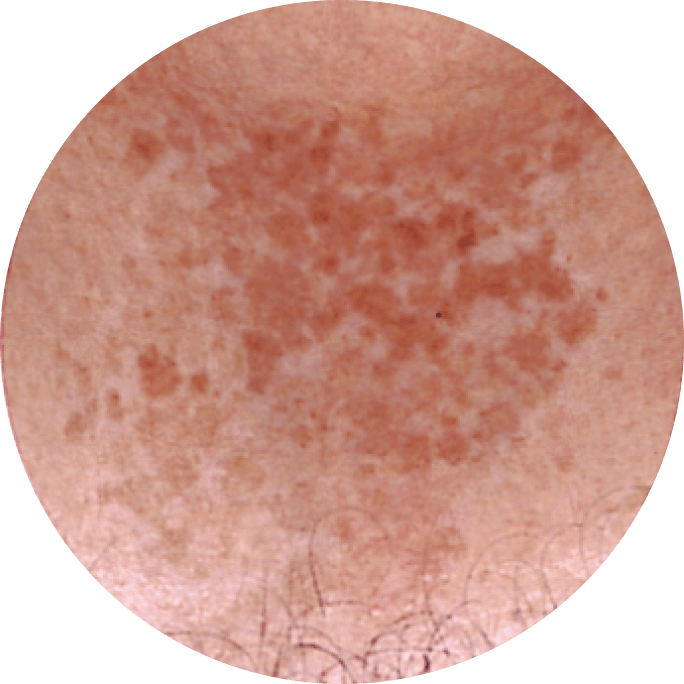
10%
T-VASI and F-VASI are validated, reliable, and widely used tools to measure depigmentation.19,20
Individuals with vitiligo have an increased risk of developing other immune-mediated diseases22
Click the hotspots below to learn more about vitiligo comorbidities.

Alopecia areata
Hazard Ratio 5.6x(1.2% incidence in people with vitiligo)
Thyroid disease
Hazard Ratio 8x(1.56% incidence in people with vitiligo*)
Psoriasis
Hazard Ratio 4.4x(2.7% incidence in people with vitiligo)
Type 1 diabetes mellitus
Hazard Ratio 1.3x(0.8% incidence in people with vitiligo)
Pernicious anemia
Hazard Ratio 1.8x(0.5% incidence in people with vitiligo)
Inflammatory bowel disease
Hazard Ratio 1.6x(0.7% incidence in people with vitiligo)
Atopic dermatitis
Hazard Ratio 2.9x(3.1% incidence in people with vitiligo)
Rheumatoid arthritis
Hazard Ratio 1.7x(0.7% incidence in people with vitiligo)
Incidence reflects the rate at which new cases of a condition are diagnosed within a population over a specified period of time.
Hazard ratio (HR) is a measure of the relative risk of an event occurring at any point in time in the treatment group compared to the control group. The HRs are from a retrospective cohort analysis between matched vitiligo (n=13,687) and control cohorts (n=54,748). The vitiligo cohort included patients diagnosed with vitiligo.
*Incidence of autoimmune thyroid disease represents pooled incidences of Graves disease (0.3%) and Hashimoto's thyroiditis (1.26%) in patients with vitiligo.
These results provide further evidence that vitiligo is a complex autoimmune disease that can have multiple associated comorbid conditions. Partner with specialists when appropriate for your patients.22

Vitiligo lesions are more susceptible to sunburn10
- Vitiligo-affected skin burns approximately twice as fast as unaffected skin per given dose of UV radiation exposure.23
- People with vitiligo need to take extra care to protect their skin in the sun.10
LOOK DEEPER THAN PIGMENT:
Conversation topics to consider for your next patient visit
- Vitiligo is thought to involve an autoimmune process that targets melanocytes (the color-producing cells in their skin).5
- The disease is chronic and unpredictable, and any concern about it spreading to new places on their body is understandable.
Keep these topics for future use—download a PDF or email them for reference.
Explore the psychosocial burden your patients may be experiencing.