
About 7 out of 10 report an impact on social activities6*
Based on a case-control study from Fayoum University of 50 patients with vitiligo and a 50-patient matched healthy control group.
*Calculated estimate; not an exact reported figure.
According to a global, PHQ-9 survey-based, cross-sectional, observational study of adults from 17 countries (N=3541).2
This rate of depressive symptoms is up to
7x
higher than that of the
US general population.5
*Data were obtained from patient health questionnaire, including depression screeners.2
Based on a systematic literature review of 168 primary publications from multiple countries.4
Talk to your patients about resources and specialists available to support patients experiencing psychosocial burdens.
The above information applies to both nonsegmental and segmental vitiligo.
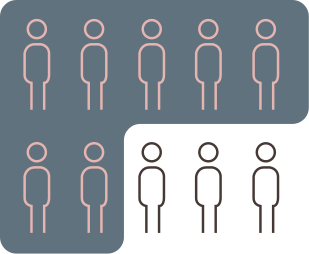
About 7 out of 10 report an impact on social activities6*
Based on a case-control study from Fayoum University of 50 patients with vitiligo and a 50-patient matched healthy control group.
*Calculated estimate; not an exact reported figure.
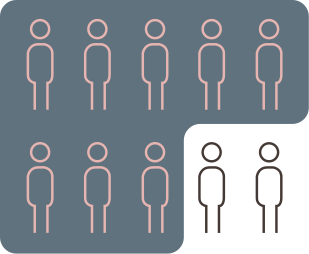
Up to 8 out of 10 patients across 10 studies report relationship difficulties and sexual dysfunction4
Based on a systematic literature review of 168 primary publications to assess psychosocial comorbidities in vitiligo.
higher rates of mental health conditions in patients with patches on the face than in those without.2
Based on a global, qualitative study of patients with diagnosed vitiligo, recruited from 17 countries (N=3541).
of adolescents report feeling stigmatized because of their disease.10
Vitiligo may be associated with negative effects on self-esteem.7
Based on a quality-of-life study of behavioral patterns and experiences in children and adolescents with vitiligo (N=74).
There are resources and specialists available for your patients who have psychosocial burden.
The information above applies to both nonsegmental and segmental vitiligo.
LOOK DEEPER THAN PIGMENT:
Conversation topics to consider for your next patient visit
Ask your patients about how vitiligo impacts their life:
Some patients may not be visiting you to primarily discuss their vitiligo. It can still be valuable to discuss the disease and any impact on their daily life. Partner with specialists when appropriate for your patients.
Keep these topics for future use—download a PDF or email them to yourself or your vitiligo patients.
Vitiligo management is anchored in 3 primary treatment goals.
References